Boundary as Shelter
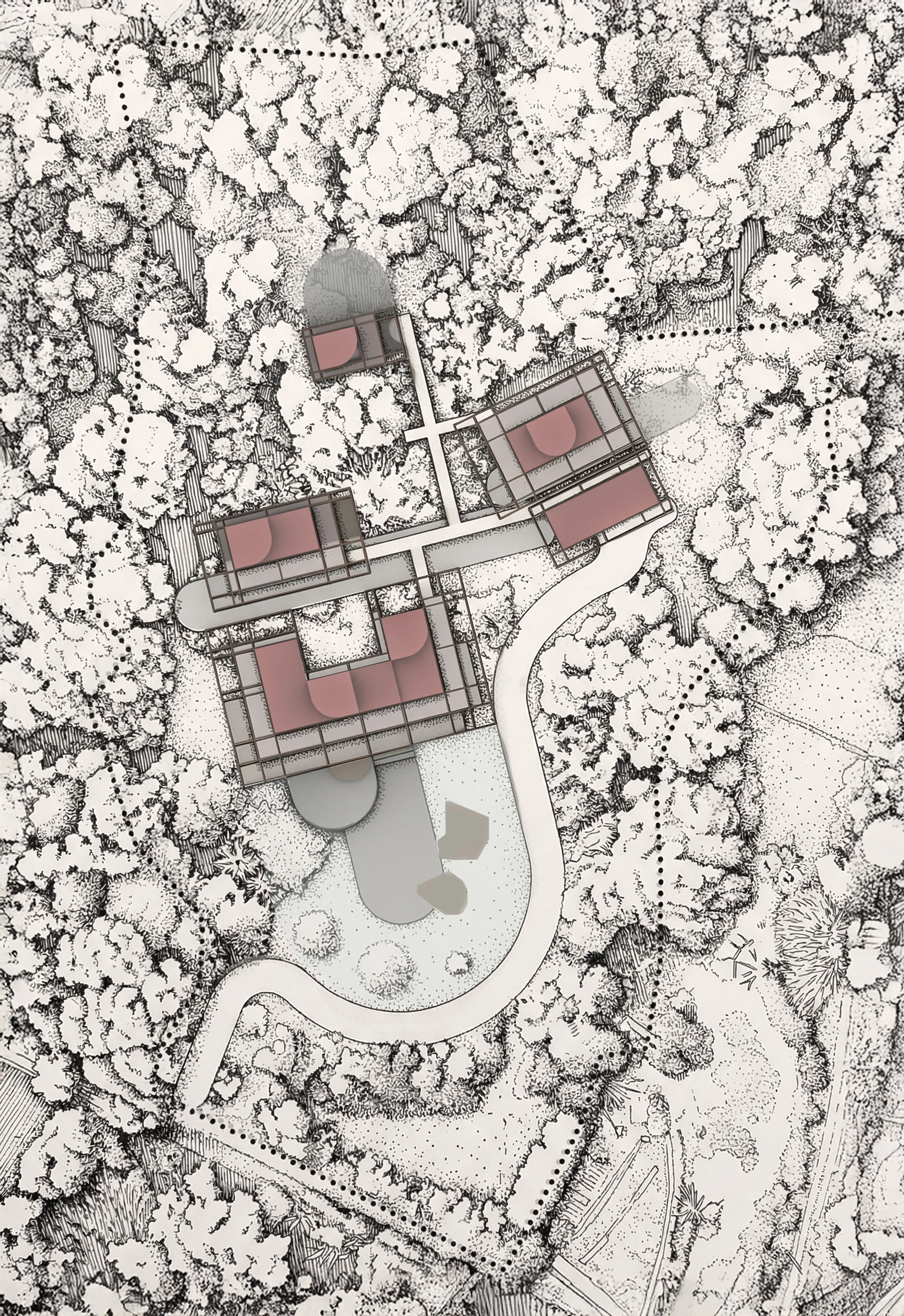
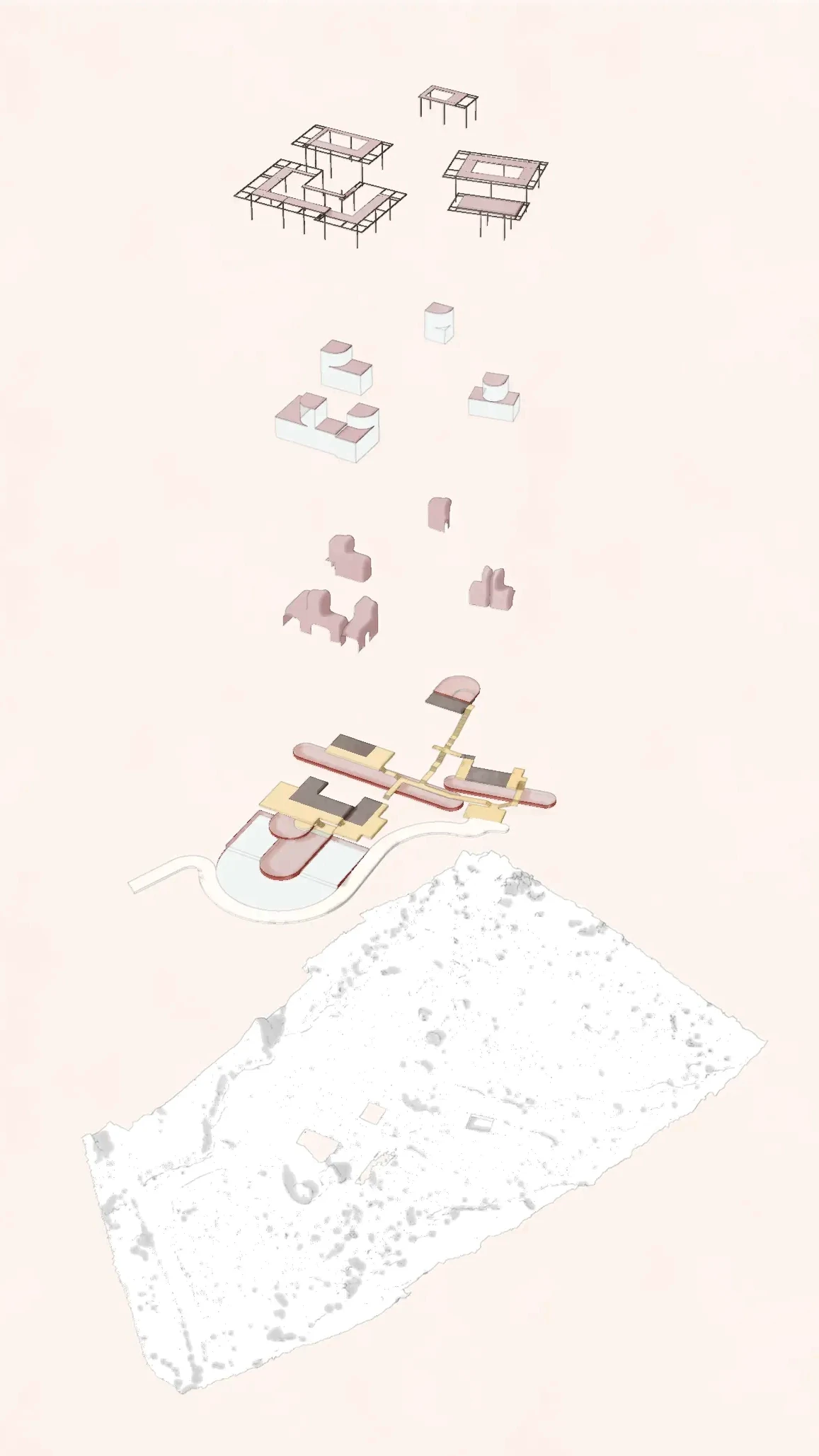
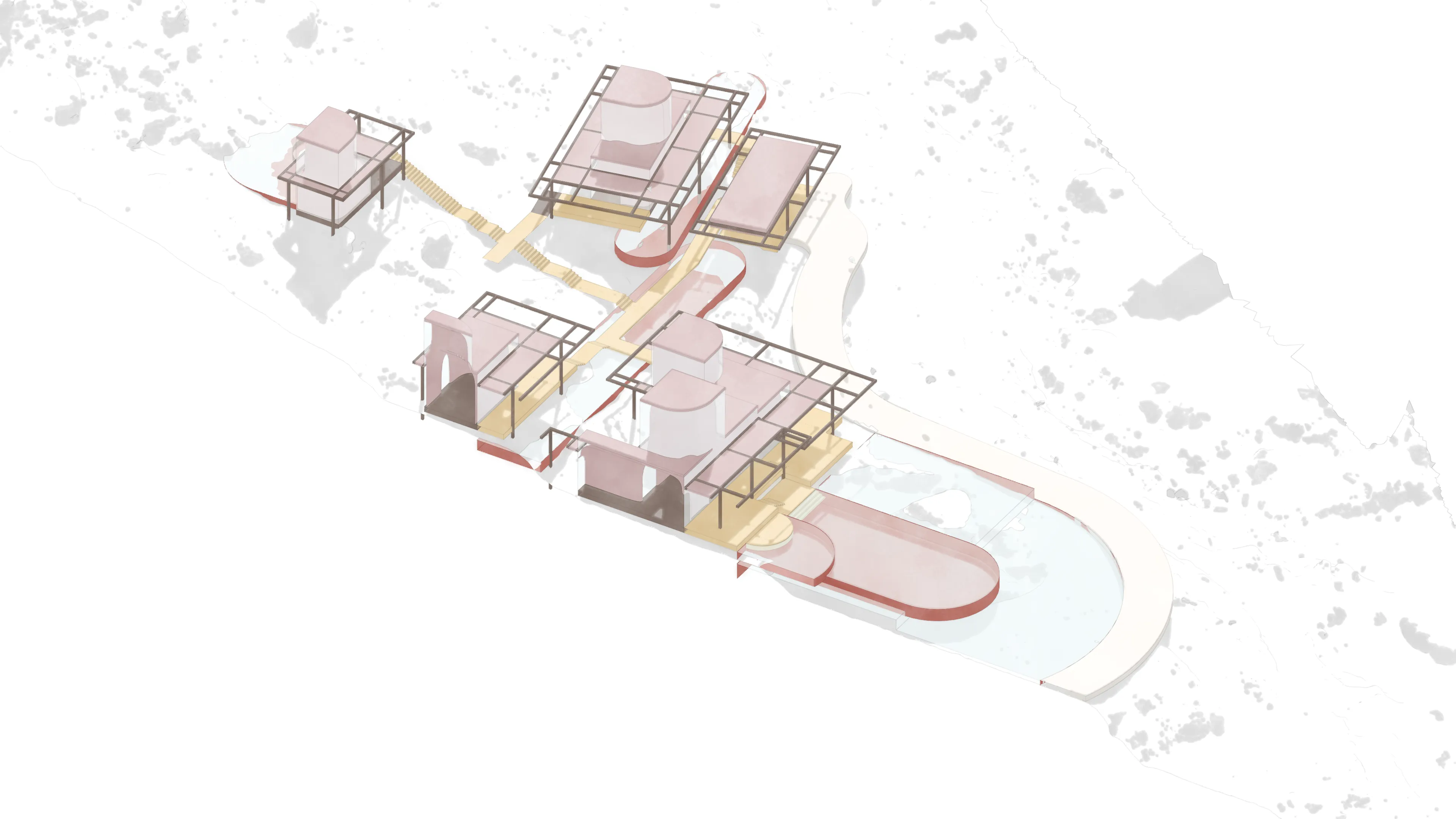
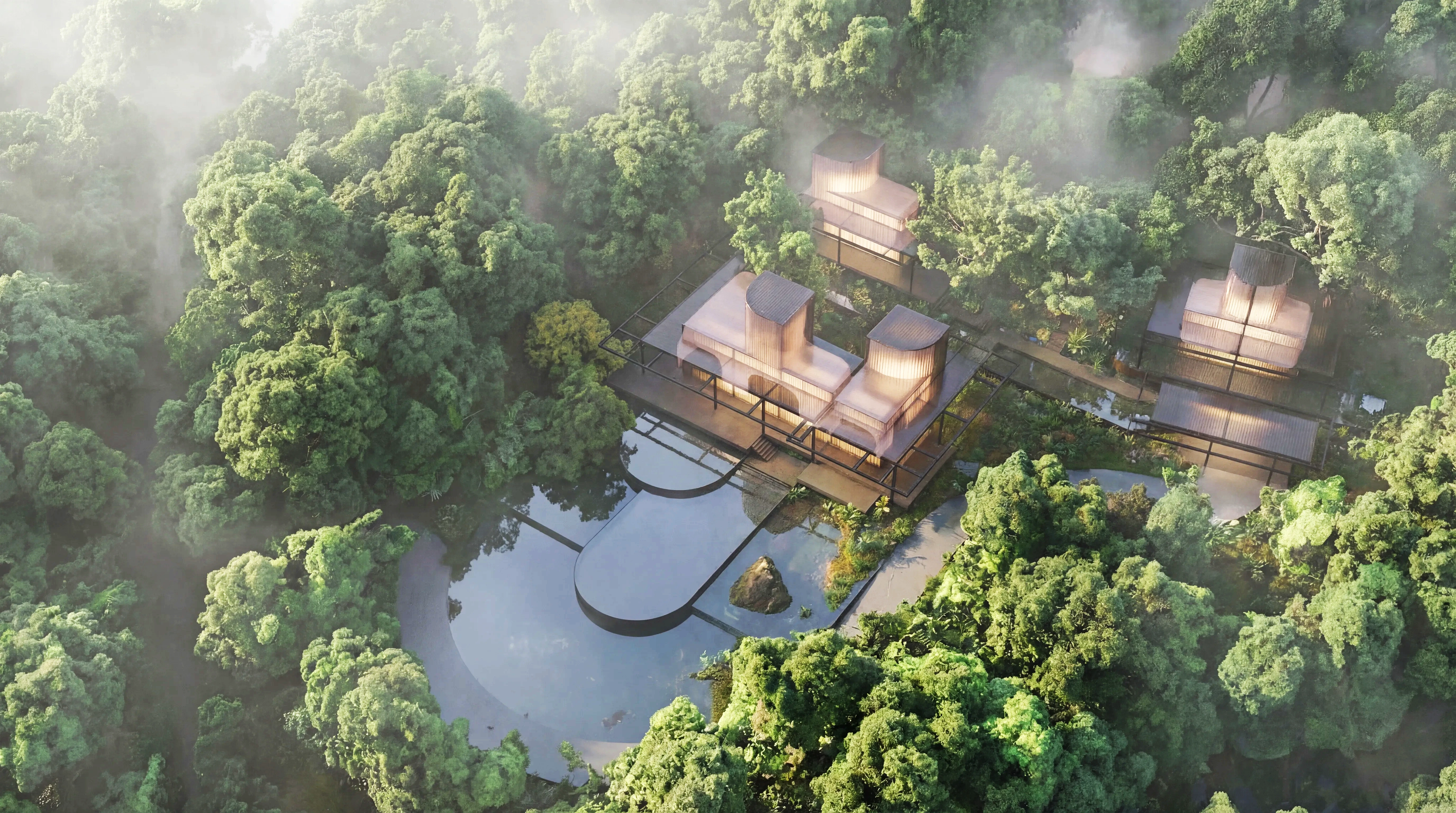
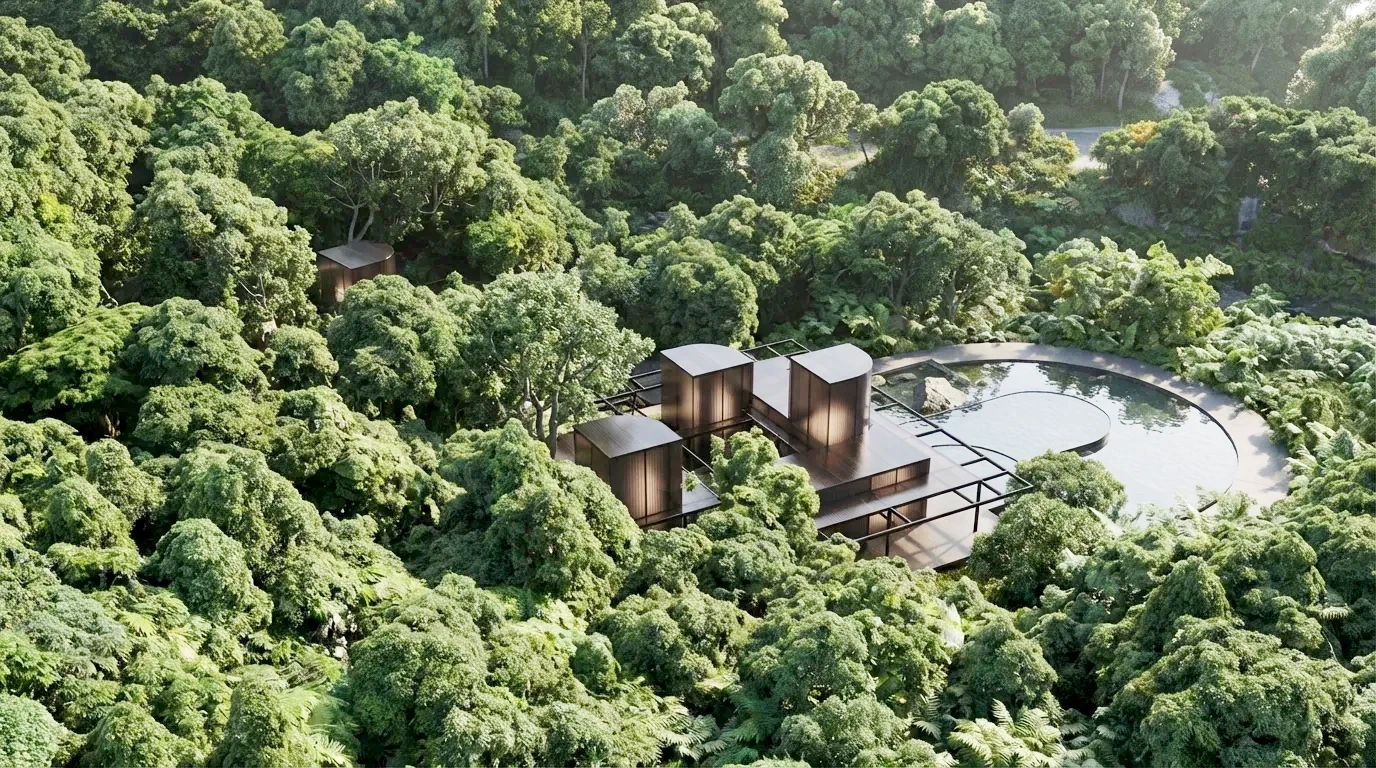
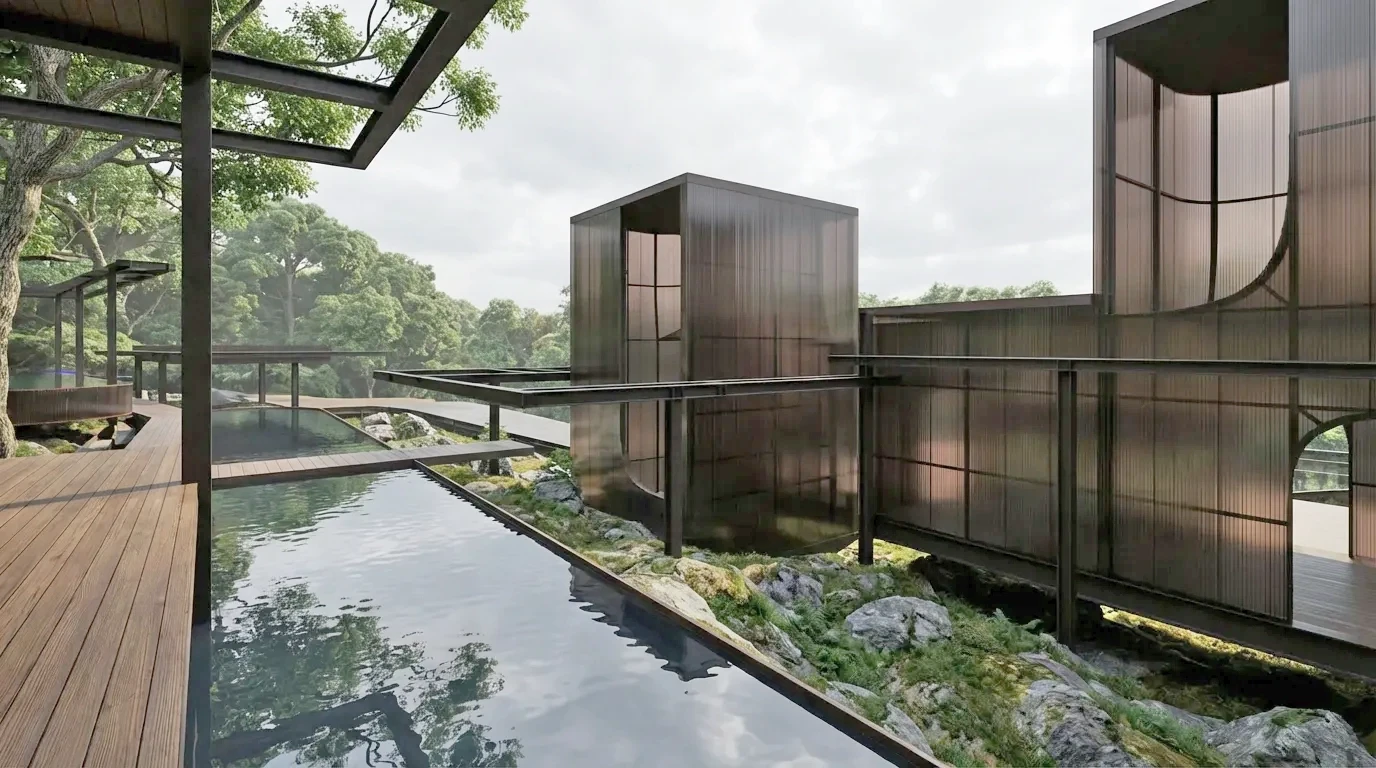
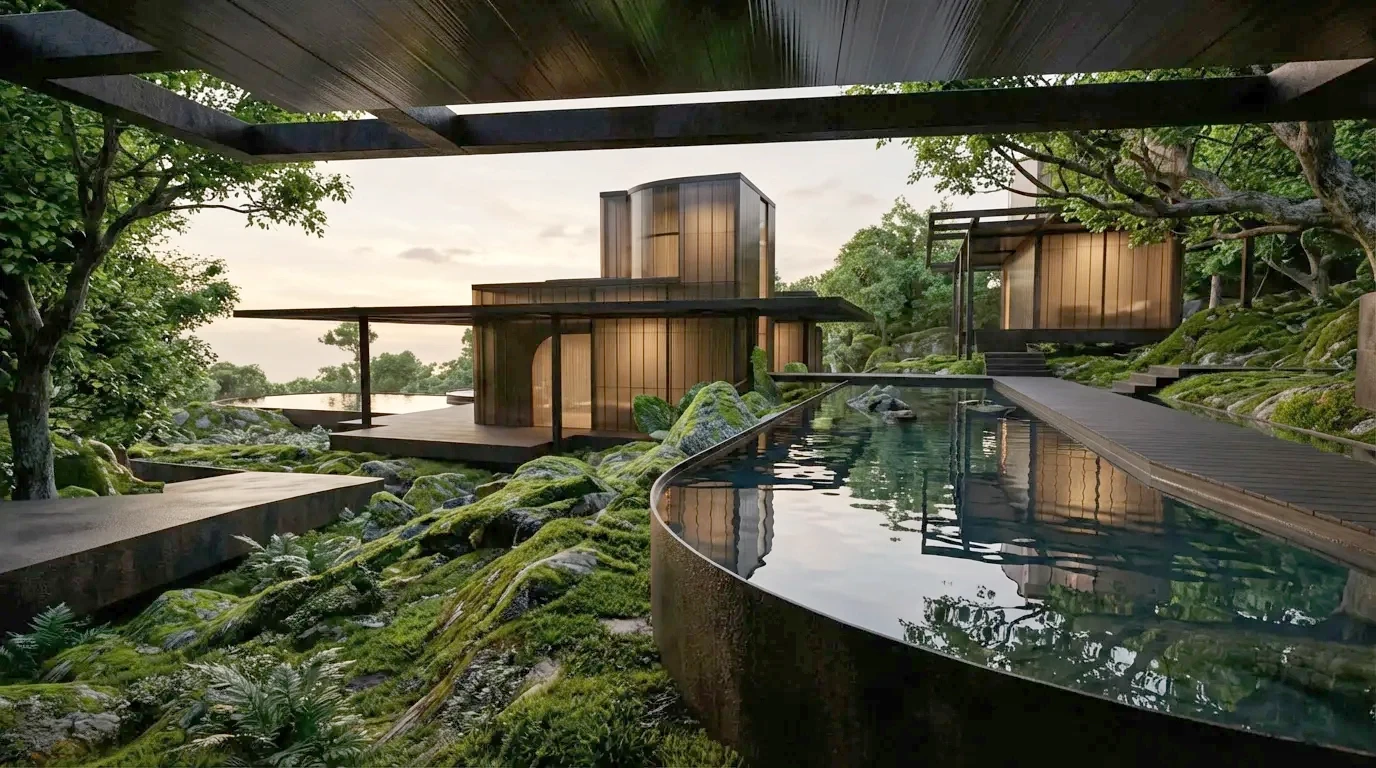
The body requires a boundary. The mind requires a nest. A phantom box creates the perimeter, rejecting the discomfort. Floating within is the womb-smooth, stone-like, devoid of corners. To enter is to inhabit the gap between the wild and the tamed. Protected, yet inside the forest in all its splendor and impact. It is a pause. A moment of warmth, preserved in a cold frame. The architectural form touches the earth lightly. The units sit on thin steel pilotis, hovering one to two meters above the ground, allowing the ancient waterways and tree roots to pass undisturbed beneath.
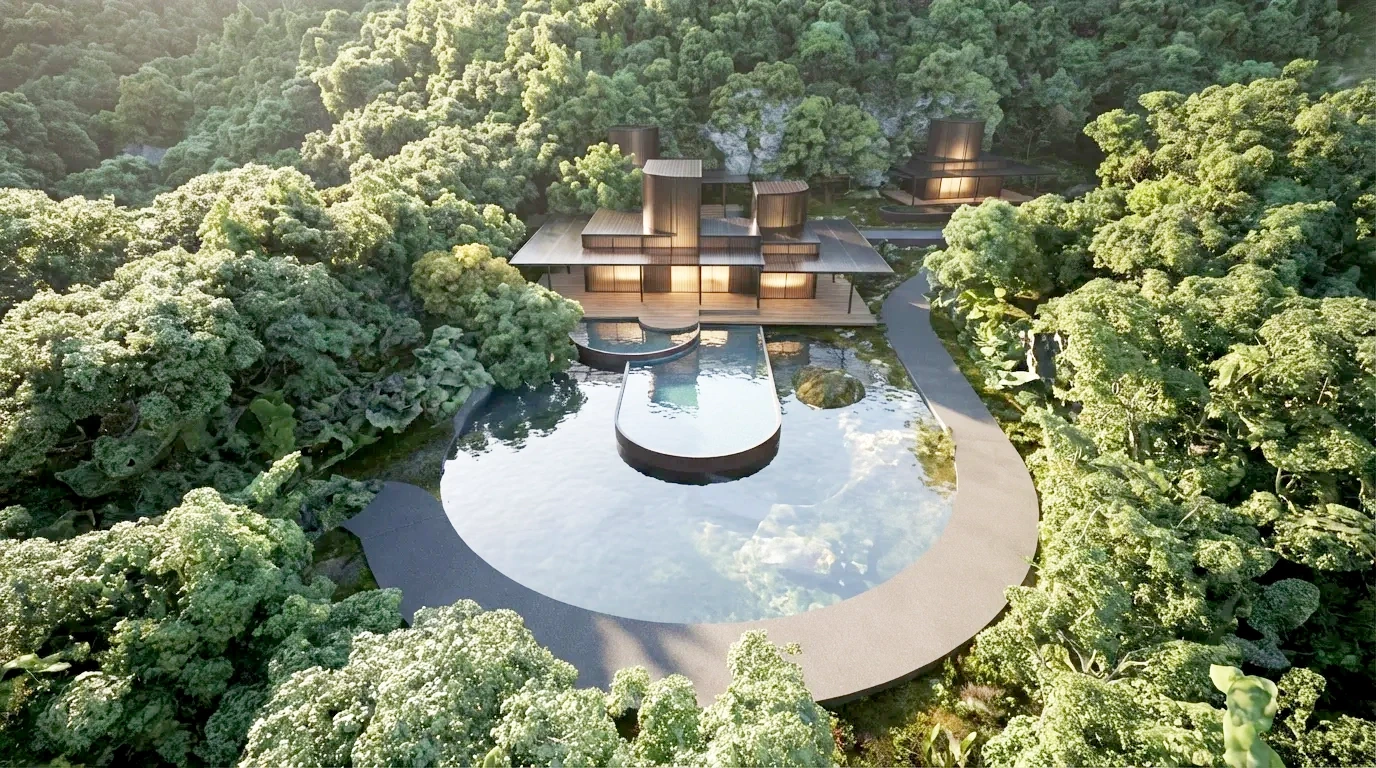
Key hospitality and social hub, where architecture is conceived as an extension of the landscape rather than a standalone object. The timber-based system, shaded terraces, and permeable ground level support a climate-responsive design while creating a central gathering space that connects the golf, lakefront, and residential zones.
Living with the Flood
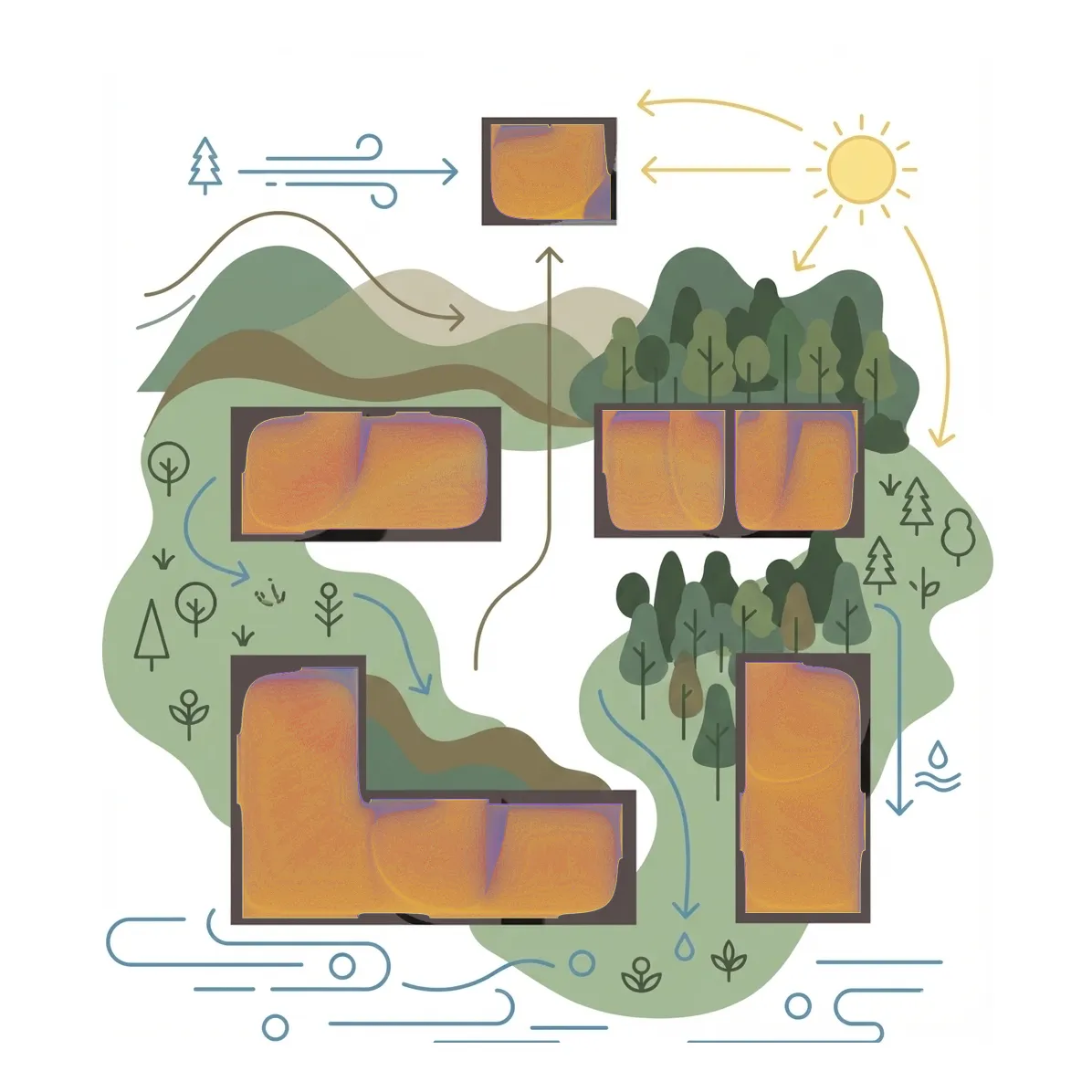
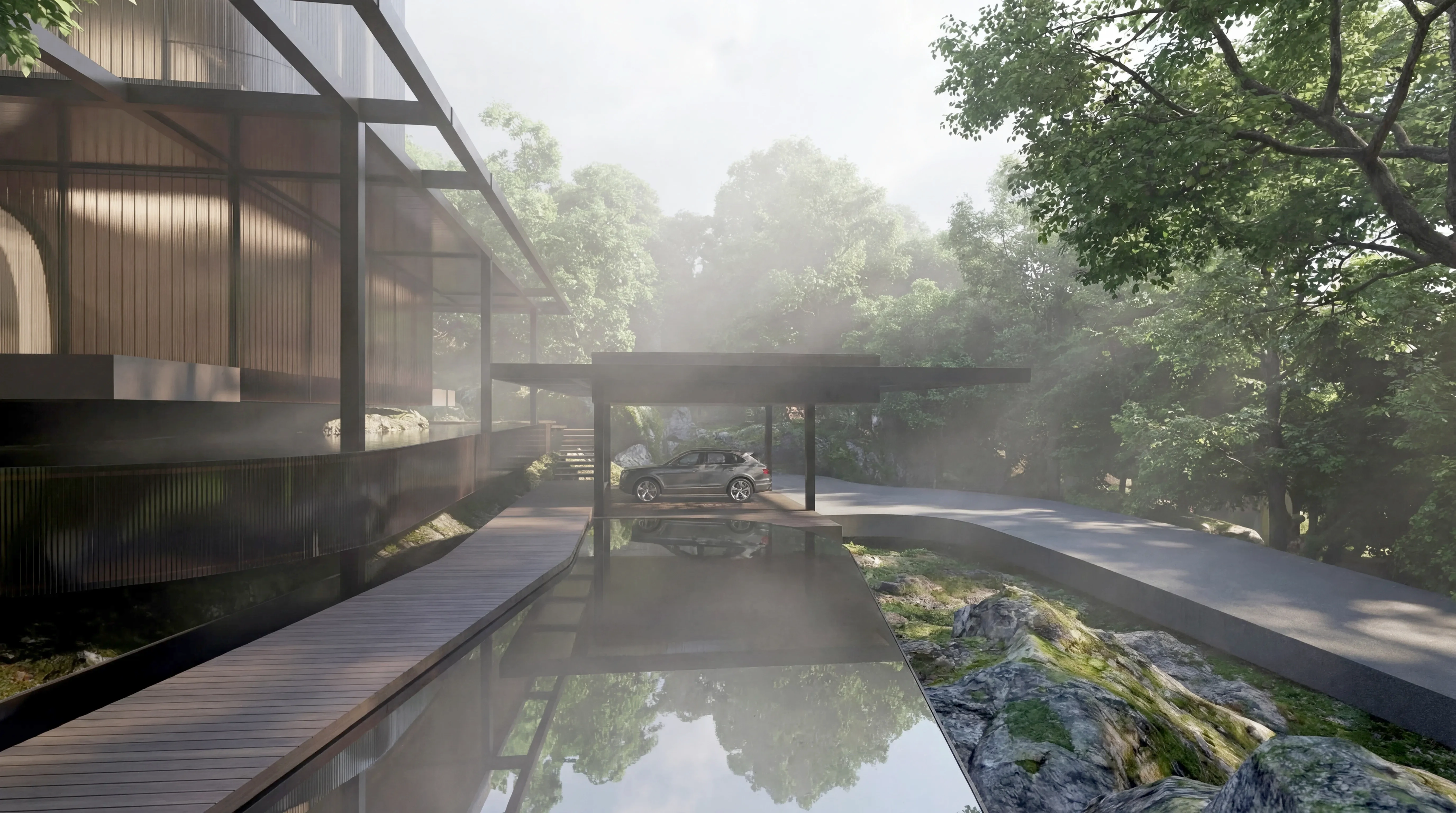
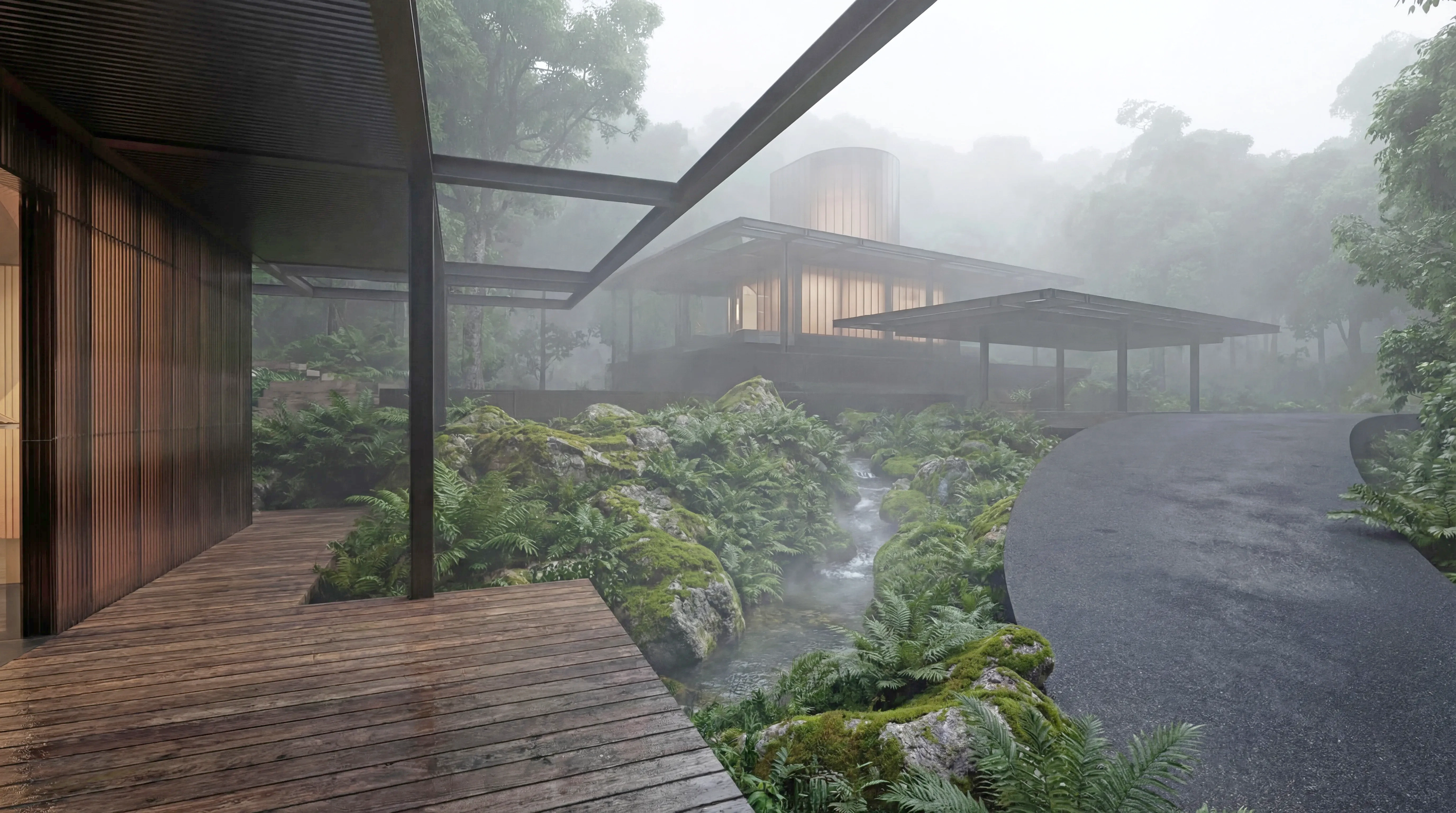
The site strategy refuses to fight the hydrology, choosing instead to live with the flood. The natural depression where the previous building stood transforms into a Wetland Courtyard. In the dry season, it is a mossy, sunken garden; in the rain season, it naturally fills to become a reflection pool and retention basin.
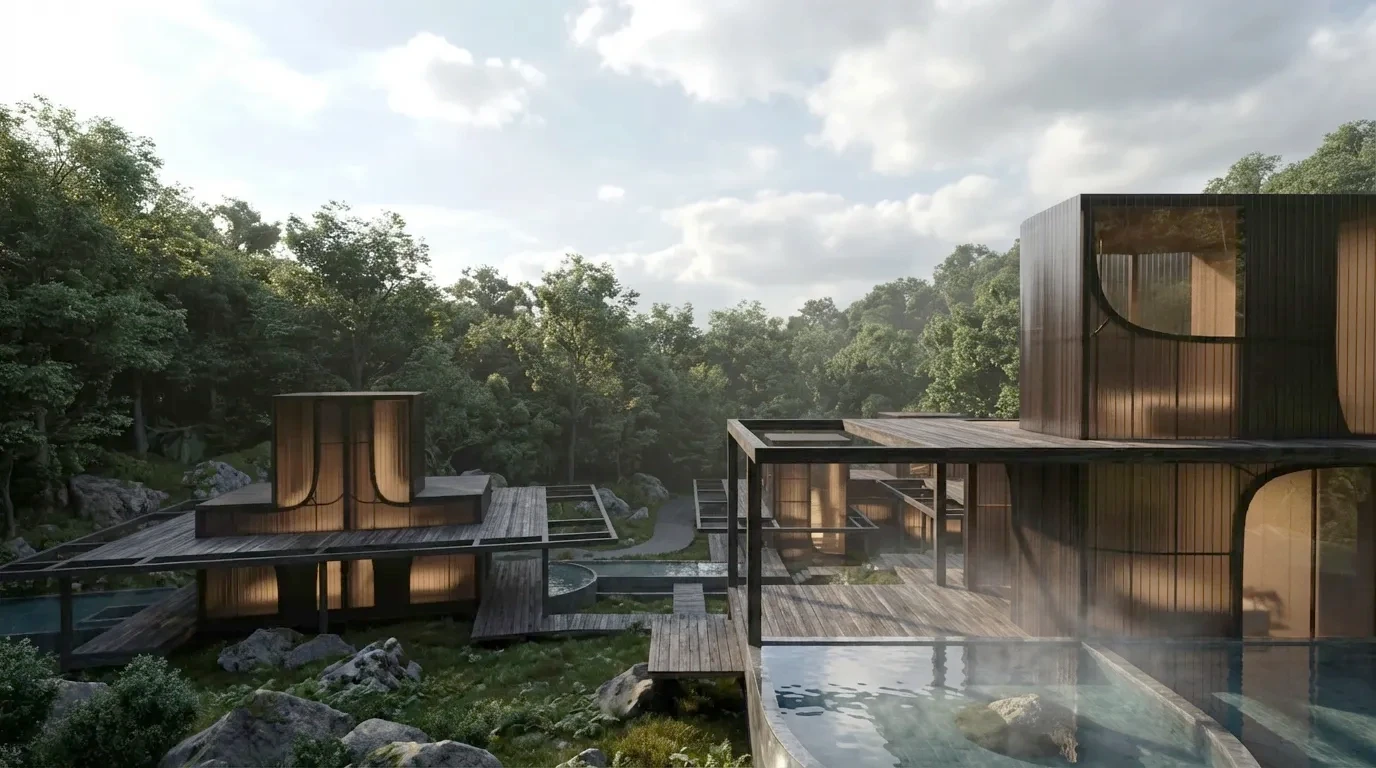
Access begins from the existing entry path and moves around the landscape where the topography is favorable, with the car approach extending to the right to drop guests at a higher point. From there, the path becomes an elevated timber boardwalk, weaving through the trees and hovering above the potential flood zone to arrive at the floating units.
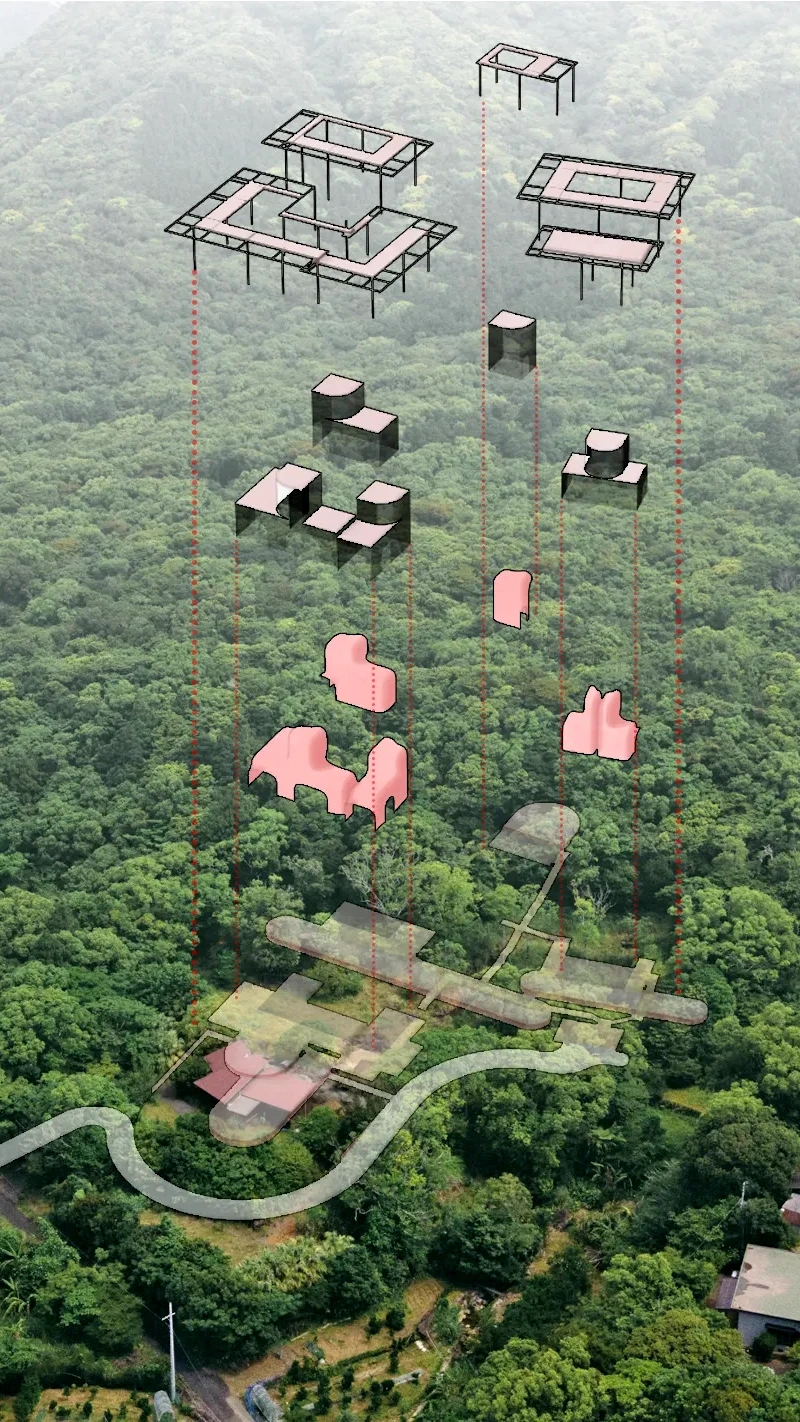
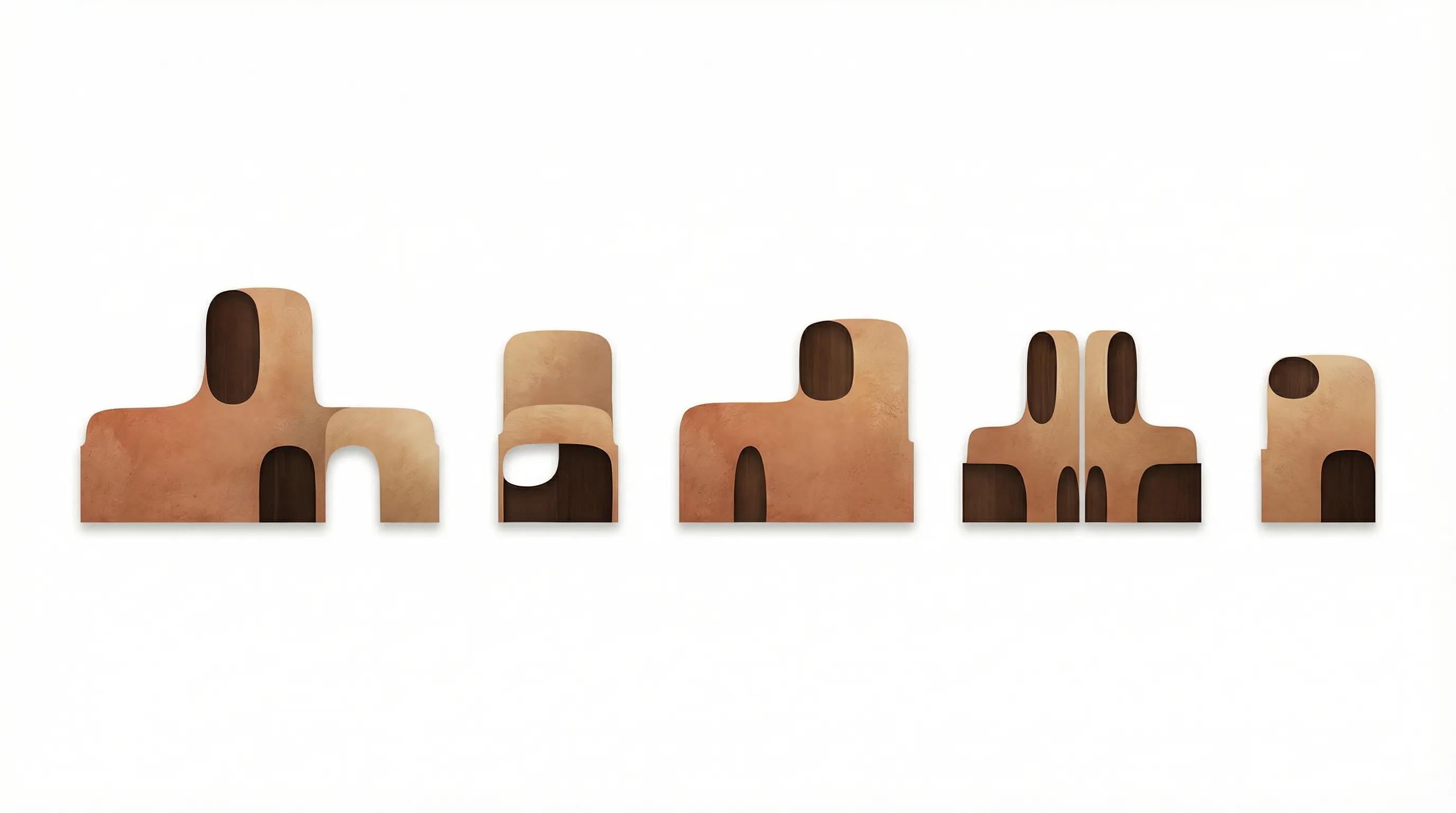
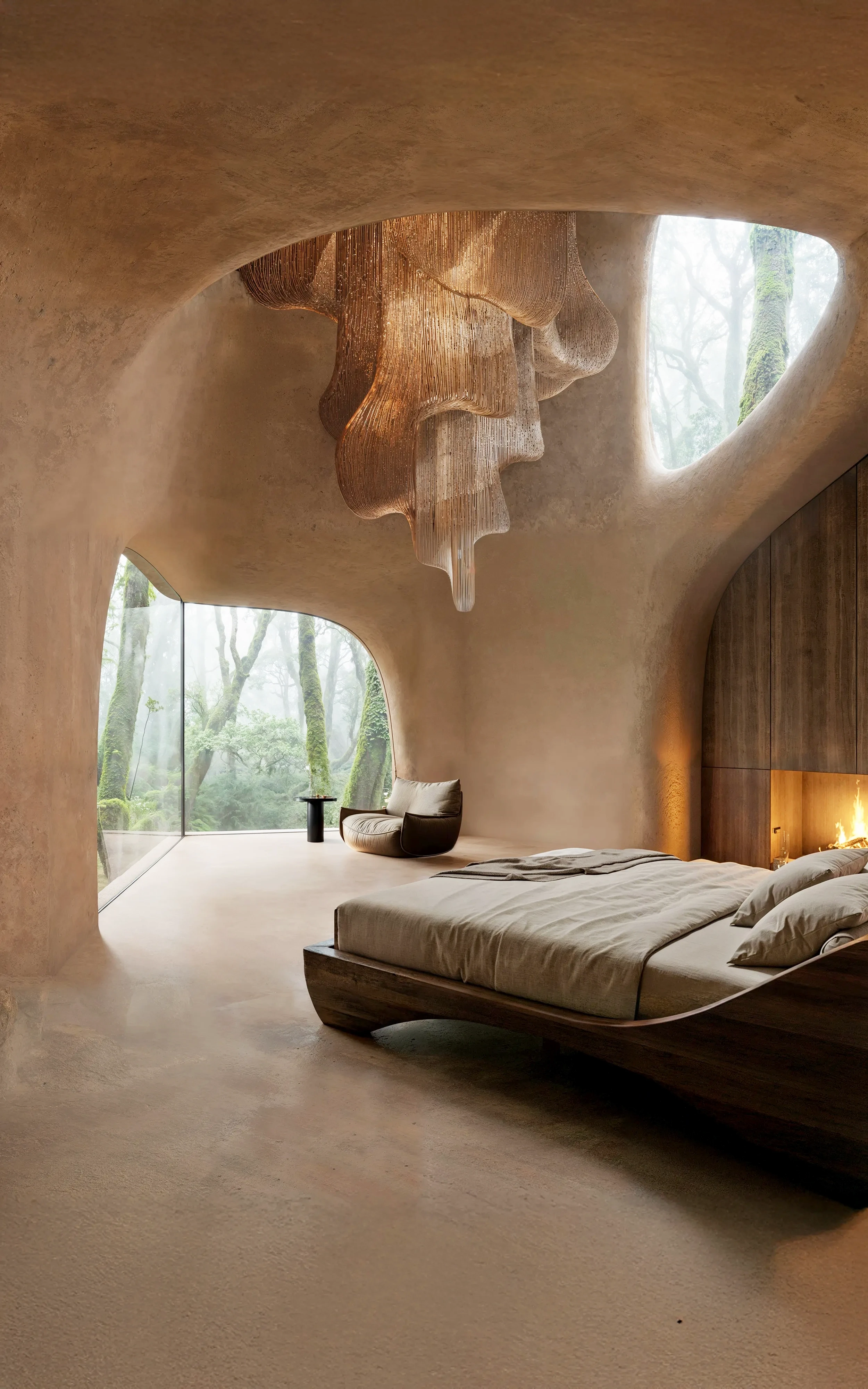
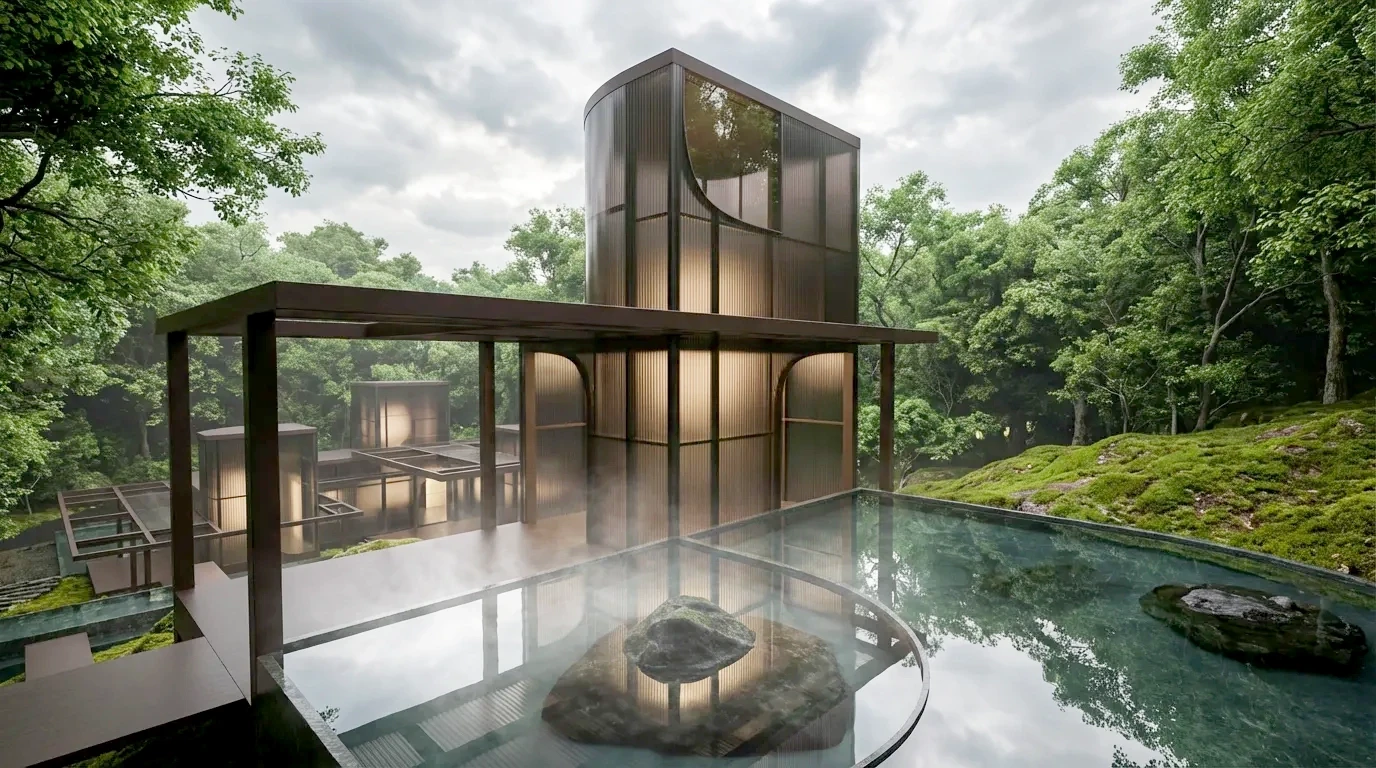
The units are defined by the event inside, composed of two distinct systems that separate the logic of protection from the spirit of habitation. The first is the Skin: a translucent, minimal, ninety-degree glass box that acts as the absolute climate shield. It stands rational and rigid against the heavy rain, the wind, and the humidity. The second is the Space: independent, soft volumes that float within the glass vitrine. These are warm, organic shapes-sculpted purely by the function inside-manifesting as a sleeping womb, a bathing cave, or a dining hollow.
Orientation dictates the rhythm of light. Unlike the old northeast-facing structure, these new units are rotated to face Southeast and West. This enables catching the ocean horizon through the tree trunks and the colors of the sunset. On the floor, the rigid outer box casts sharp, linear, translucent shadows, while the organic inner core casts soft, graded shadows, marking the passage of time in a house that is not a shell, but a lens for the island.
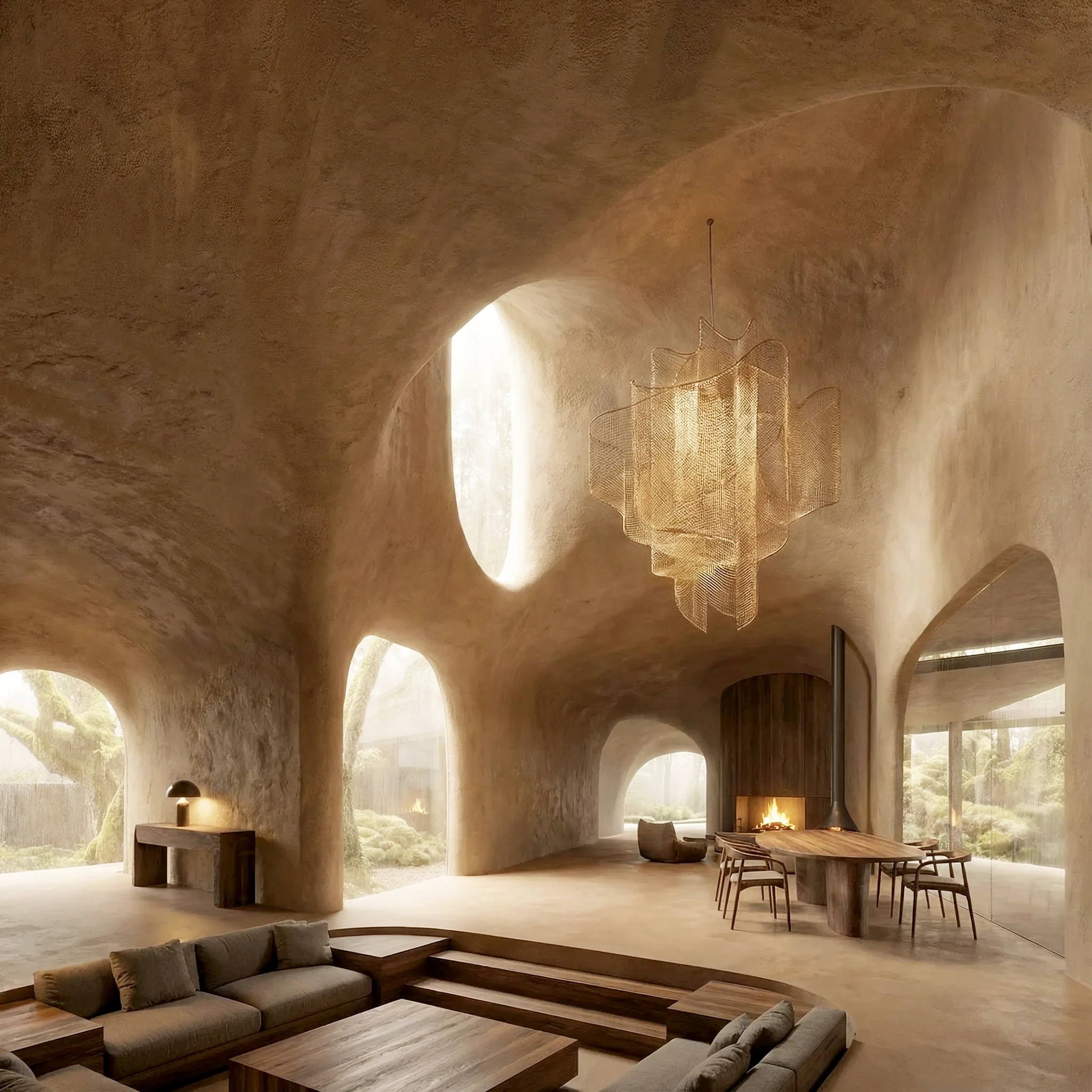
The event volumes themselves are crafted from Tsuchikabe, providing essential thermal mass. They appear as stones or creatures captured inside a glass display case. Rising from each organic core is a tubular extension, a vertical "neck" that punches up through the flat glass roof. This periscope serves a triple function: it acts as a thermal chimney drawing hot, humid air out via the stack effect; it captures the changing sky so a bather sees only the moon or falling rain; and it creates a dramatic vertical break within the horizontal expanse.